

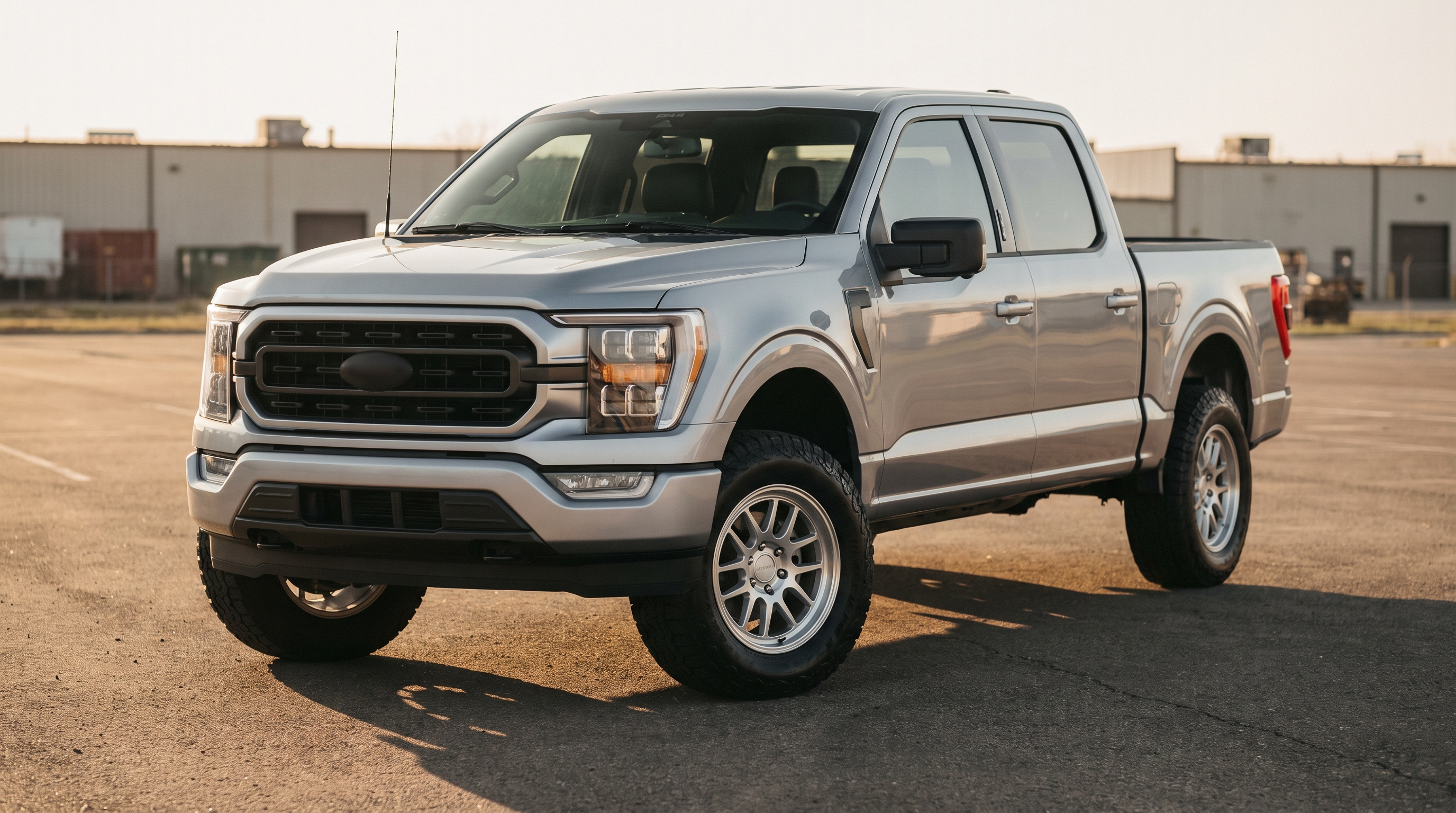
Wheels and tires are the highest-impact change you can make to an F-150. The right combination transforms the look, the ride, and where the truck can go. The wrong combination rubs, rides rough, kills your fuel economy, and wears out early. Because trucks come in so many configurations and stances, getting this right takes a little knowledge. Here is the complete guide.
Quick answer: Choose the tire first based on your real street-to-trail split, then choose a wheel with the right size and offset for your stance so nothing rubs. Match the whole package to your suspension setup, and remember that bigger tires need a speedometer recalibration.
Start with the tire
Tires decide how the truck drives and where it can go more than any other single part. Be honest about how you actually use the truck.
- Highway all-terrain: quiet, long-wearing, and efficient, for trucks that mostly see pavement with occasional light dirt.
- Balanced all-terrain: the classic F-150 answer, good on road with real capability on the trail.
- Aggressive all-terrain or mud-terrain: maximum grip off-road, at the cost of noise, wear, and fuel economy.
Our all-terrain tire guide goes deep on matching tread to use. Pick the least aggressive tire that still does what you need.
Then choose the wheel
With the tire decided, choose a wheel that fits your truck and stance. The key numbers are diameter, width, and offset.
Size
Bigger wheels look aggressive but leave less tire sidewall, which affects ride and off-road performance. Many truck owners prefer a moderate wheel size with more sidewall for ride comfort and trail durability. Larger diameters suit street trucks where looks lead.
Offset and backspacing
Offset decides how far the wheel tucks in or pokes out, and it makes or breaks fitment. Too aggressive and the tire rubs the fender or the truck pokes past the body; too conservative and you lose the stance you wanted. Our offset and backspacing guide explains the numbers in plain English. On trucks, backspacing also affects clearance with suspension and control arms.
Finish and construction
Gloss black, matte, machined, and bronze finishes all change the truck's character. A quality forged or flow-formed wheel is lighter and stronger than a basic cast wheel, which helps ride and durability, especially off-road.
Match it to your stance
Wheel and tire choices depend on your suspension. A leveled or lifted truck clears bigger tires and can run more aggressive fitment; a lowered street truck wants a wheel-and-tire package that tucks cleanly. Decide stance and wheel-tire together, as covered in our F-150 suspension guide, so the whole package works.
The details people forget
- Speedometer: larger tires make the speedometer read low until recalibrated. Plan for it.
- Load rating: if you tow or haul, choose a tire with the correct load rating for the job.
- Lug pattern and hardware: confirm the correct bolt pattern and use proper lug hardware for your wheels.
- Fender clearance: confirm the exact wheel and tire clear at your ride height and stance before buying.
Build paths
The street truck
Larger-diameter gloss wheels with a low-profile street tire and an aggressive-but-clean fitment. Looks lead, so prioritize stance and finish.
The daily all-rounder
A moderate wheel with a balanced all-terrain. Comfortable ride, good manners, and enough capability for weekend adventures.
The trail rig
A durable wheel with more sidewall and an aggressive all-terrain, sized to your lift. Prioritize durability and grip over pure looks.
Frequently asked questions
Should I pick the wheel or the tire first?
The tire. It defines how the truck drives and where it goes. Then choose a wheel that fits the tire and your stance.
What offset do I need?
It depends on your truck and stance. Start from a known good fitment for your setup and use our offset guide. When unsure, go slightly less aggressive to stay rub-free.
Do bigger tires hurt fuel economy?
Heavier and more aggressive tires generally reduce fuel economy and can dull acceleration. Choose the least aggressive tire that meets your needs.
Will I need to recalibrate my speedometer?
Yes, meaningfully larger tires make the speedometer read low, so plan a recalibration to keep speed and mileage accurate.
Can I run these on a stock-height truck?
Moderate wheel and tire packages fit stock trucks, but larger tires may need a leveling kit or lift to clear. Confirm clearance for your setup.
Build your package
Everything filters to your exact truck. Start with your 2021+ F-150 or 2015-2020 F-150, browse wheels and tires, and match it to your suspension. Get the tire, offset, and stance right and the truck comes together.


