

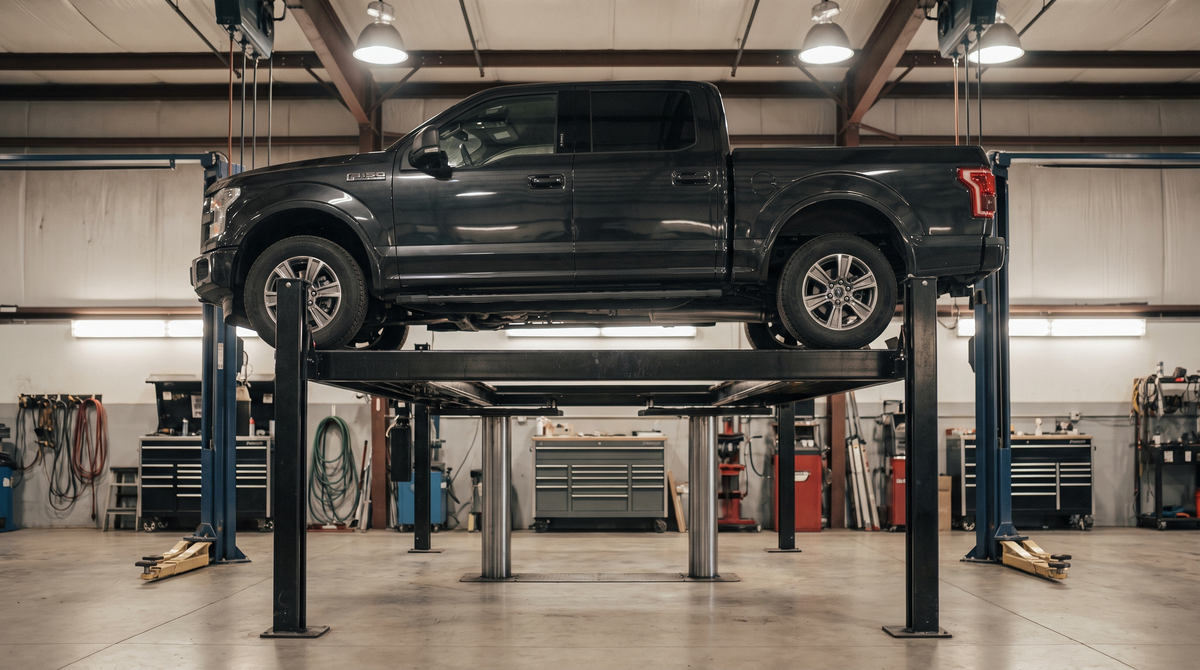
Suspension is the mod that changes an F-150 more than any other. It sets the stance, decides what tires you can run, and controls how the truck rides, tows, and behaves off pavement. It is also where people waste the most money, because they buy a kit before deciding what the truck is actually for. This guide sorts leveling, lifting, and lowering so you pick right the first time.
Quick answer: Match the suspension to the mission. Leveling for a clean stance and moderate tires on a budget, lifting for big tires and real trail clearance, lowering for an aggressive street truck. Decide your tire size and use first, then choose the setup that supports it.
Start with the mission, not the kit
Every good F-150 suspension decision starts with one question: what is this truck for? A daily that occasionally tows, a weekend trail rig, and a slammed street truck all want completely different parts. Get honest about your street-to-trail split and the tire size you want, because tires and stance are linked. Our all-terrain tire guide pairs directly with this one, and the full picture lives in the complete 2021+ F-150 mod guide.
Leveling kits
The factory F-150 sits nose-down by design. A leveling kit raises the front to match the rear, giving a cleaner, more purposeful stance and room for a moderate tire increase. It is the budget-friendly, daily-friendly path that keeps most of the factory ride and installs relatively easily.
Who it is for
- You want a cleaner look without a big financial or ride-quality commitment.
- You want to fit a moderately larger tire.
- The truck stays mostly on pavement with occasional light trail or gravel.
What to know
Leveling changes geometry slightly, so an alignment afterward is smart. It will not give you serious off-road clearance, and very large tires may still rub without additional work.
Lift kits
A lift raises the entire truck for large tires and genuine trail clearance. It is the path for a real off-road rig or a big-tire look, and it costs more, can involve more components, and changes ride and geometry more than a level.
Who it is for
- You run large tires and want the clearance to match.
- You wheel the truck off-road and need articulation and protection.
- You want the tall, aggressive stance a leveling kit cannot deliver.
What to know
Bigger lifts can require additional parts to keep alignment and driveline angles correct, and they affect the truck's center of gravity and ride. Quality matters here, both for safety and for how the truck drives every day. Our leveling vs lift comparison goes deeper on the decision.
Lowering an F-150
Not every truck goes up. A lowered F-150 street truck sits planted and aggressive, corners flatter, and looks fantastic on the right wheels. It trades ground clearance for road manners and style, so it is a pavement-only choice. Pair it with quality wheels and a low-profile street tire for the full effect, as shown in our sleeper F-150 build.
Shocks, control arms, and the supporting cast
Stance is only half of suspension. The parts that control the motion matter just as much.
- Shocks: upgraded shocks improve control, comfort, and off-road capability. On a lifted or leveled truck, matching shocks to the new ride height keeps things composed.
- Control arms: upper control arms can restore proper geometry and clearance on lifted or leveled trucks.
- Bump stops and add-a-leaf or blocks: details that fine-tune ride and load behavior.
Browse everything in the suspension collection for your truck.
Do not forget the tires and speedometer
Bigger tires change your effective gearing and make the speedometer read wrong until it is recalibrated. Factor tire size into your stance decision from the start, and plan a speedometer correction with larger tires. Match wheel and tire choices to your new ride height so nothing rubs. Shop wheels and tires.
Build paths
The clean daily
A leveling kit, a moderate all-terrain, and matching shocks. Cleaner stance, better presence, and a ride you can live with every day.
The trail rig
A quality lift, large all-terrains, upper control arms, and good shocks, plus underbody protection. Build clearance and control for the terrain you actually run.
The street truck
A lowering setup, gloss wheels, and low-profile street tires. Aggressive, planted, and pavement-focused.
Frequently asked questions
Is a leveling kit enough, or do I need a lift?
If you want a clean stance and moderate tires and stay mostly on pavement, a leveling kit is plenty. Step up to a lift when you want big tires and real off-road clearance.
Do I need an alignment after leveling or lifting?
Yes. Changing ride height changes geometry, so an alignment keeps tire wear and handling correct.
Will a lift hurt my ride quality?
A quality kit with matched shocks rides well, but a big lift changes the truck's height and feel. Cheap kits are where ride quality suffers.
Can I lower a 4x4 F-150?
Lowering is most common on 2WD street trucks, but setups exist for various configurations. Confirm the kit lists your exact truck and drivetrain.
How big a tire can I fit?
It depends on your stance. A level clears moderately larger tires, a lift clears the big stuff. Always confirm clearance for your specific setup to avoid rubbing.
Set your stance
Everything filters to your exact truck. Start with your 2021+ F-150 or 2015-2020 F-150, browse the suspension collection, and pair it with the right wheels and tires. Decide the mission, choose the stance, and build from there.


