

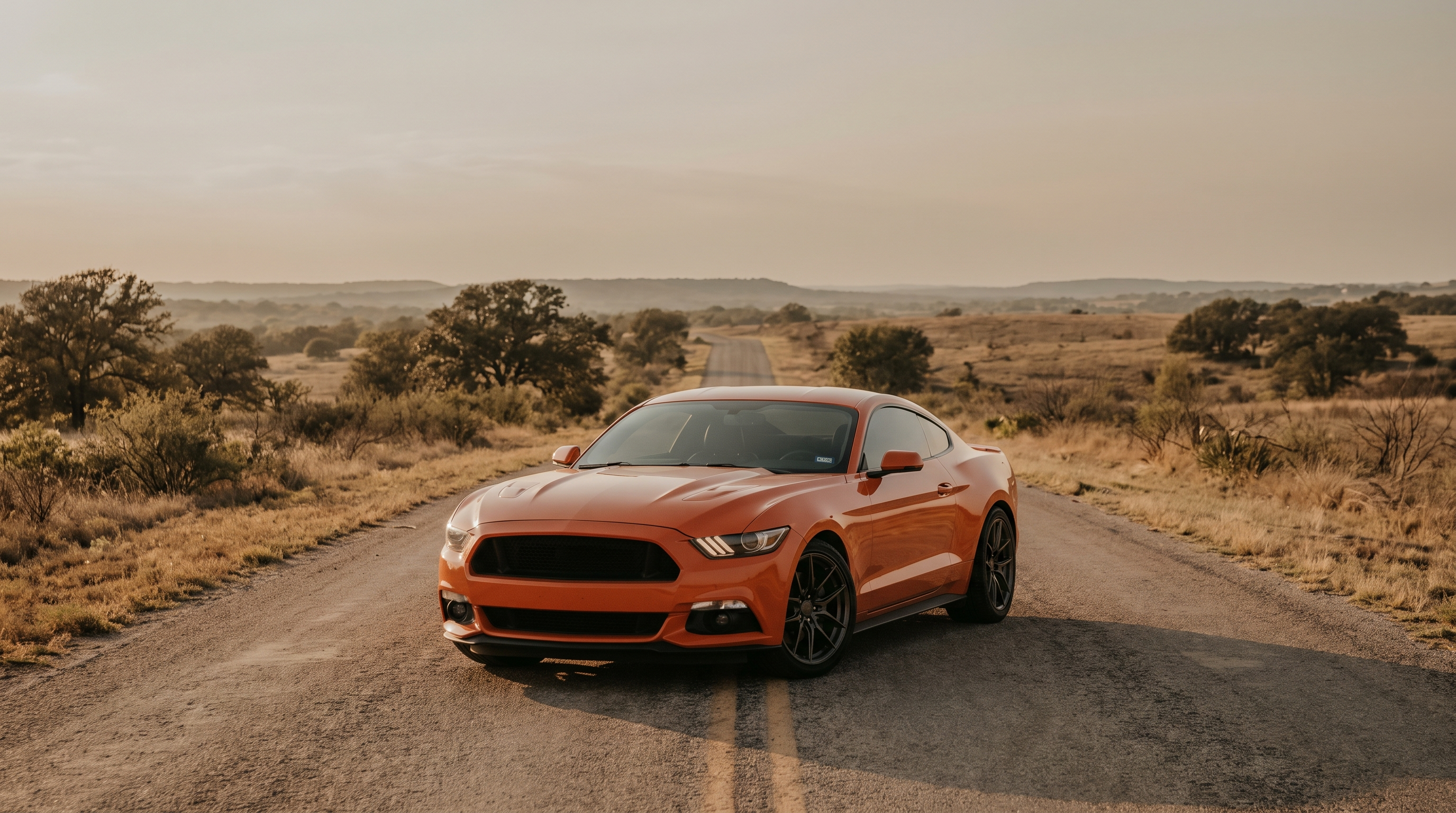
Every Mustang shopper eventually faces the same fork: the GT with the Coyote V8, or the EcoBoost with the turbo four. Both are good cars, and both build well, but they are different animals with different strengths. If you are choosing which to buy, or you already have one and want to know how to build it, here is the honest comparison.
Quick answer: The GT is the sound-and-power pick, a naturally aspirated V8 that responds to classic bolt-ons. The EcoBoost is the lighter, more efficient pick that responds hard to airflow and tuning and turns eagerly. Choose the GT for V8 character and top-end punch, the EcoBoost for balance, efficiency, and turbo tunability.
The two engines
The GT and the Coyote 5.0
The GT's Coyote V8 is the heart of the modern Mustang. It sounds incredible, pulls hard at the top end, and has the deepest aftermarket of any modern Mustang engine. It responds to intake, exhaust, and a tune, and it is the natural base for big power adders down the road. Our complete S550 GT mod guide and Coyote bolt-on order lay out the build.
The EcoBoost and the 2.3 turbo
The EcoBoost's turbo four makes strong torque, weighs less over the nose, and is more efficient day to day. Because it is turbocharged, it responds hard to airflow, cooling, and tuning. Our EcoBoost mod guide shows how to make it move.
How they drive
The GT feels and sounds like a muscle car, with a big V8 voice and strong pull as the revs climb. The EcoBoost feels lighter and more eager to change direction because there is less weight over the front axle, and it delivers torque earlier in a more turbocharged way. Neither is better in the abstract; they are different flavors of fun.
How they build
- GT: classic naturally aspirated path. Intake, exhaust, tune, then handling, then power adders. Sound and top-end power lead.
- EcoBoost: turbo path. Airflow and a tune deliver the biggest gains, cooling supports sustained power, and the lighter nose makes handling mods especially rewarding.
Both share the same suspension, wheel, and brake logic, so the chassis side of a build is similar. The engine is where the paths diverge.
Cost and efficiency
The EcoBoost is generally the more efficient, lower-cost entry into Mustang ownership, which leaves more budget for mods. The GT commands more up front but gives you the V8 and the biggest long-term power ceiling. Think about where you want your money: into the car, or into the build.
Which should you choose
- Want V8 sound and top-end power: the GT is the answer, and it is the base for serious power later.
- Want efficiency, balance, and turbo tunability: the EcoBoost rewards you, especially on back roads.
- On a budget: the EcoBoost gets you into a Mustang for less and builds cheaply through tuning.
- Planning big power: the GT's V8 is the more natural foundation for power adders.
Frequently asked questions
Is the EcoBoost Mustang fast?
It makes strong torque and responds hard to tuning and airflow, so a built EcoBoost is genuinely quick, and the lighter nose helps it handle.
Does the GT handle worse because of the V8?
The GT carries more weight over the front axle, but good suspension and tires make it corner well. The EcoBoost simply starts with a lighter nose.
Which is cheaper to build?
The EcoBoost builds cheaply through tuning and airflow. The GT costs more but offers a higher long-term power ceiling.
Can both take a power adder?
Yes. The GT V8 is the classic base for superchargers and big power, while the EcoBoost makes more through boost and tuning. Build the foundation first either way.
Which sounds better?
The GT, if you want a V8 rumble. The EcoBoost has a purposeful turbo note but cannot match a V8's voice.
Build either one
Whichever you choose, we filter parts to your exact car. Start with your 2015-2023 S550 Mustang, then explore engine, exhaust, and suspension. Pick the flavor you want and build to its strengths.


