

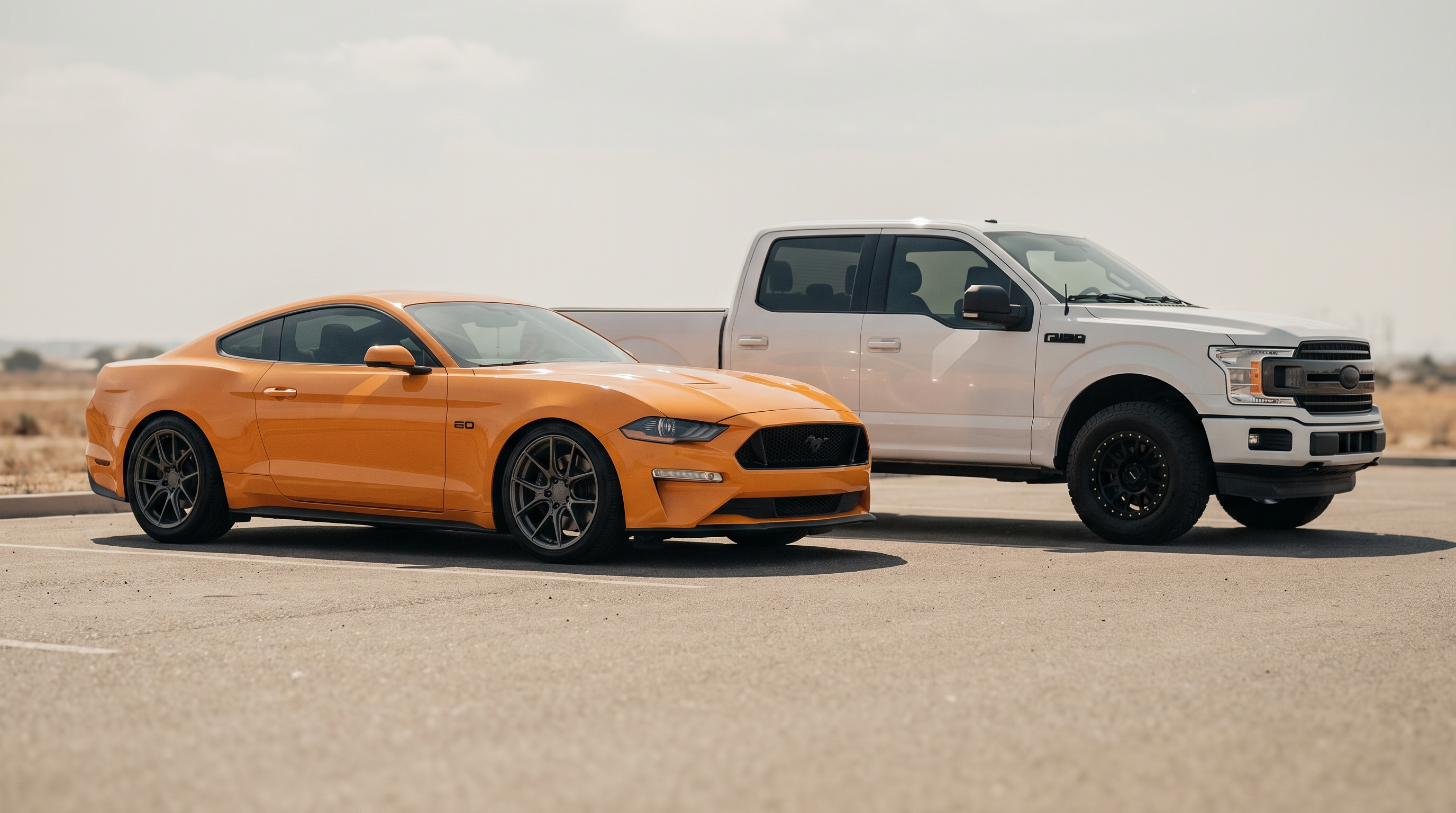
Offset and backspacing are the numbers that decide whether your new wheels tuck perfectly or rub the fender on the first bump. They sound technical, but the idea is simple. Here it is in plain English.
Quick answer: Offset is where the wheel sits side to side relative to its centerline. The wrong number causes poke or rub. Get it right for your exact vehicle and stance before you order.
Offset, in plain terms
Offset is the distance between the wheel's mounting face and its centerline, measured in millimeters. A higher positive offset tucks the wheel inward. A lower or negative offset pushes it outward for a more aggressive, flush or poked look. Too aggressive and the tire meets the fender.
Backspacing
Backspacing measures from the mounting face to the back edge of the wheel. It matters most for inner clearance, like brakes, suspension, and on trucks the control arms. Offset and backspacing are two ways of describing related things.
Why it makes or breaks fitment
- Too much poke: the tire sits outside the fender and rubs on turns or bumps.
- Too little clearance inside: the wheel contacts brakes or suspension.
- Lowered or lifted: changes everything, so measure at your real ride height.
How to get it right
- Start from a known good fitment for your exact vehicle and stance.
- Account for wheel width and tire size, not just offset.
- When in doubt, go slightly less aggressive to stay rub-free.
Put the numbers to work in our wheels guide, then browse wheels for your Mustang or F-150.


