

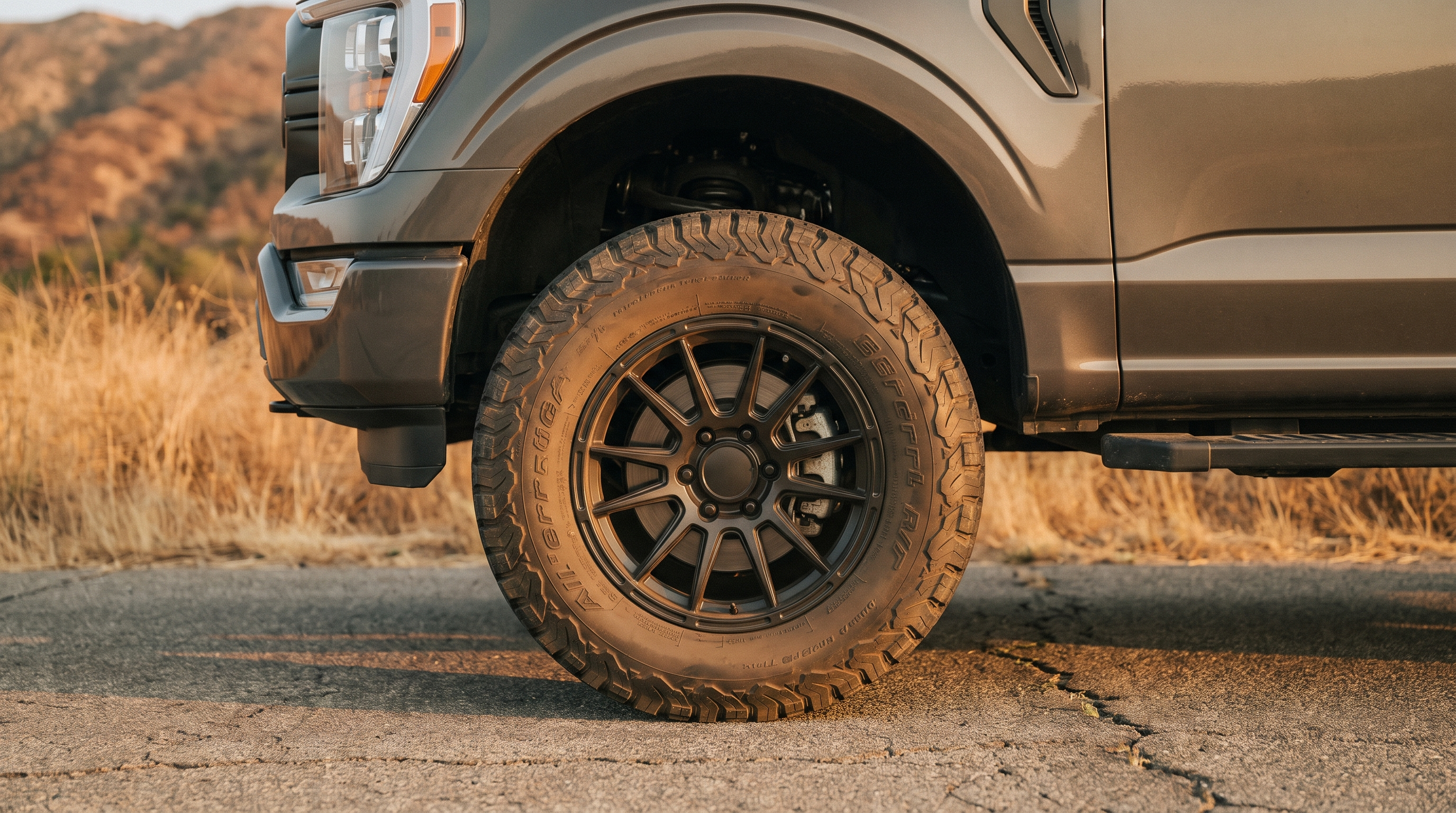
Bigger tires are the fastest way to transform how your F-150 looks and where it can go. But every truck owner eventually asks the practical question: what do bigger tires actually cost me in fuel economy and performance? Here is the straight answer so you can size your tires with open eyes.
Quick answer: Yes, bigger tires generally hurt fuel economy and can dull acceleration, because they are heavier, have more rolling resistance, and effectively change your gearing. They also make your speedometer read wrong until it is corrected. The effect ranges from mild to significant depending on how much bigger and how aggressive you go. You can offset some of it with a regear. Choose the smallest tire that gets you the look and capability you want.
Why bigger tires cost fuel and power
A few things happen when you go up in tire size:
- Weight: bigger tires are heavier, and that weight is rotating and unsprung, which is the worst kind for acceleration and efficiency.
- Rolling resistance: larger and more aggressive tires create more drag, which costs fuel.
- Effective gearing: a taller tire is like installing a lower numerical gear, it makes the truck feel less punchy off the line and can hurt fuel economy, because the engine works differently for the same speed.
- Speedometer error: a taller tire makes your speedometer read low until recalibrated, which also throws off your trip and mileage readings.
How much does it actually cost?
The impact scales with how far you go. A modest tire increase with a balanced all-terrain has a mild effect most owners happily accept. A big jump to tall, aggressive mud-terrains has a much more noticeable effect on fuel economy and acceleration. Aggressive tread and heavy weight compound the loss. The honest takeaway: some loss is unavoidable with bigger tires, so decide how much you are willing to trade for the look and capability. Our all-terrain vs mud-terrain guide covers the tread side of that tradeoff.
How to offset it
The best fix for the lost punch is a regear, installing a numerically higher rear gear to restore the acceleration a taller tire took away. Regearing brings back the responsiveness and can even help fuel economy in some cases by getting the engine back into its happy range. It is the classic companion to big tires. See our off-road build guide for where tires and gears fit. Browse differentials and gears. And do not forget to recalibrate the speedometer for the new tire size, often part of a tune, browse tuners.
Choosing the right size
The smart move is to run the smallest tire that gives you the look and clearance you actually want. That minimizes the fuel and performance cost while still transforming the truck. Bigger is not automatically better, especially if the truck is mostly a daily driver. Match the tire to your stance, as covered in our suspension guide. Browse wheels and tires.
Frequently asked questions
Do bigger tires hurt gas mileage on an F-150?
Yes, generally. Bigger tires are heavier, add rolling resistance, and change your effective gearing, all of which reduce fuel economy. The bigger and more aggressive the tire, the larger the effect.
Do bigger tires make my truck slower?
They can dull acceleration because they are heavy and effectively lower your gearing. A regear restores the lost punch.
How do I fix the power loss from bigger tires?
Regear with a numerically higher rear gear to restore acceleration, and recalibrate the speedometer. This is the classic companion to big tires.
Will bigger tires mess up my speedometer?
Yes, a taller tire makes the speedometer read low until recalibrated, which also affects your mileage and trip readings. Plan a recalibration.
What tire size should I run?
The smallest that gives you the look and clearance you want, to minimize the fuel and performance cost. Match it to your stance and confirm clearance.
Shop tires and gears for your F-150
Everything filters to your exact truck. Start with your 2021+ F-150 or 2015-2020 F-150, then browse wheels and tires, gears, and suspension. Size smart and offset the loss with a regear.


