

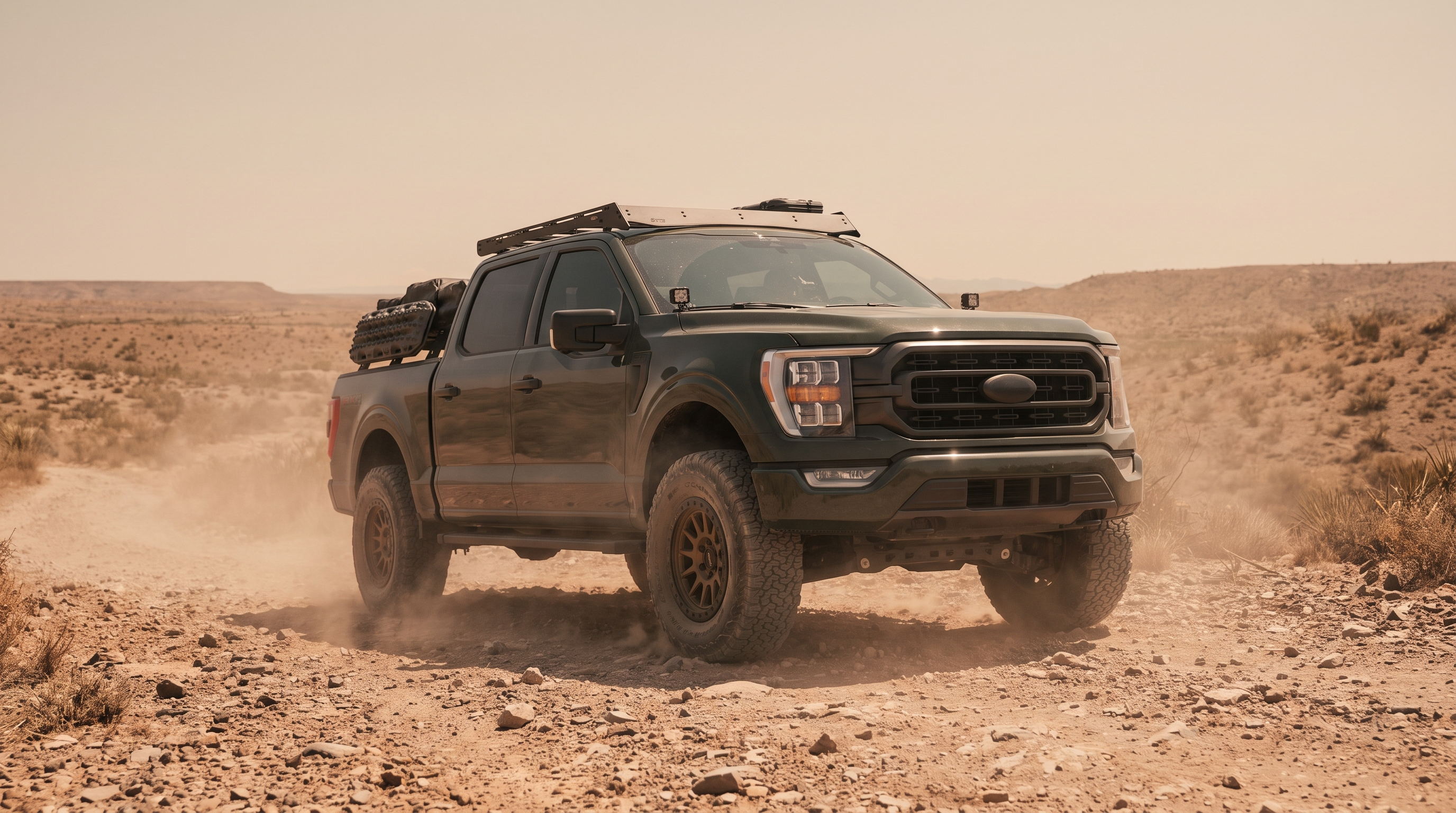
You do not need a Raptor to build a genuinely capable off-road F-150. A standard F-150 is a fantastic starting point, and with the right upgrades in the right order, it becomes a trail rig that can go almost anywhere you point it. The key is building capability and durability, not just a tall stance. Here is how to build a non-Raptor F-150 for the trail.
Quick answer: Build off-road capability in order: tires and clearance first, then protection, then recovery gear and lighting. Traction and durability matter more than horsepower off-road, so prioritize the parts that keep you moving and keep the truck intact. If you want the factory desert truck instead, compare in our Raptor guides.
Capability comes from traction and clearance
Off-road, the truck that keeps moving is the one with grip and the ground clearance to avoid getting hung up. That is why an off-road build starts with tires and stance, not power. A standard F-150 with the right foundation is genuinely capable. If you are weighing a build against buying the factory desert truck, our Raptor vs built F-150 comparison lays out the choice, and the Raptor upgrades guide covers that path.
Step 1: Tires and clearance
All-terrain or mud-terrain tires
Tires are the single biggest off-road upgrade. A capable all-terrain covers most trail needs while staying civil on the road, and a mud-terrain maximizes grip in the rough at the cost of noise and wear. Match the tire to how technical your trails are, as covered in our all-terrain tire guide.
Lift and clearance
A lift creates room for big tires and the clearance to clear obstacles. Match the lift to your tire size and terrain, and keep geometry correct with the right supporting parts, as covered in our F-150 suspension guide. Browse suspension and wheels and tires.
Step 2: Protection
The trail is hard on the underside of a truck. Skid plates protect the engine, transmission, and fuel tank, and rock sliders guard the rockers and bodywork. Underbody protection is cheap insurance against expensive damage, and it is what separates a truck that can take a hit from one that gets stranded. Browse exterior protection.
Step 3: Recovery and self-reliance
Off-road, being able to get yourself unstuck is essential. Rated recovery points, a recovery strap, traction boards, and the knowledge to use them safely keep a stuck moment from becoming a very long day. Our recovery gear guide covers the essentials and why quality matters here.
Step 4: Lighting
Night wheeling demands light. A light bar floods the trail ahead, and pods, ditch lights, and rock lights fill in the coverage. Good off-road lighting transforms a night trail run, as covered in our truck lighting guide. Browse lighting.
Power comes last
Off-road, power is the least important part of capability. A breathing and tune package adds response, but traction, clearance, protection, and recovery are what actually get you through. Build those first, then add power if you want it, following local emissions rules. Browse intakes and tuners.
Build paths
The weekend trail truck
Capable all-terrains, a sensible lift, skid plates, recovery gear, and a light bar. Ready for most trails and still a great daily.
The serious wheeler
Aggressive tires, a matched lift, full underbody protection, comprehensive lighting, and a complete recovery kit. Built to tackle technical terrain and take a hit.
Frequently asked questions
Can a regular F-150 keep up with a Raptor off-road?
A well-built standard F-150 is genuinely capable. The Raptor is a purpose-built factory desert truck, but a thoughtful build gets a standard truck a long way. See our Raptor vs built comparison.
What is the first off-road upgrade?
Tires, then the clearance to run them. Traction and ground clearance define off-road capability.
Do I need skid plates?
If you wheel the truck, yes. Underbody protection is cheap insurance against expensive trail damage.
How important is recovery gear?
Essential. Rated recovery points, a strap, and traction boards, plus knowing how to use them, keep a stuck moment manageable.
Should I add power for off-road?
Power is the least important part of capability off-road. Build traction, clearance, protection, and recovery first.
Build your trail rig
Everything filters to your exact truck. Start with your 2021+ F-150 or 2015-2020 F-150, then explore suspension, wheels and tires, lighting, and exterior protection. Build capability and durability in order, and go anywhere.


