

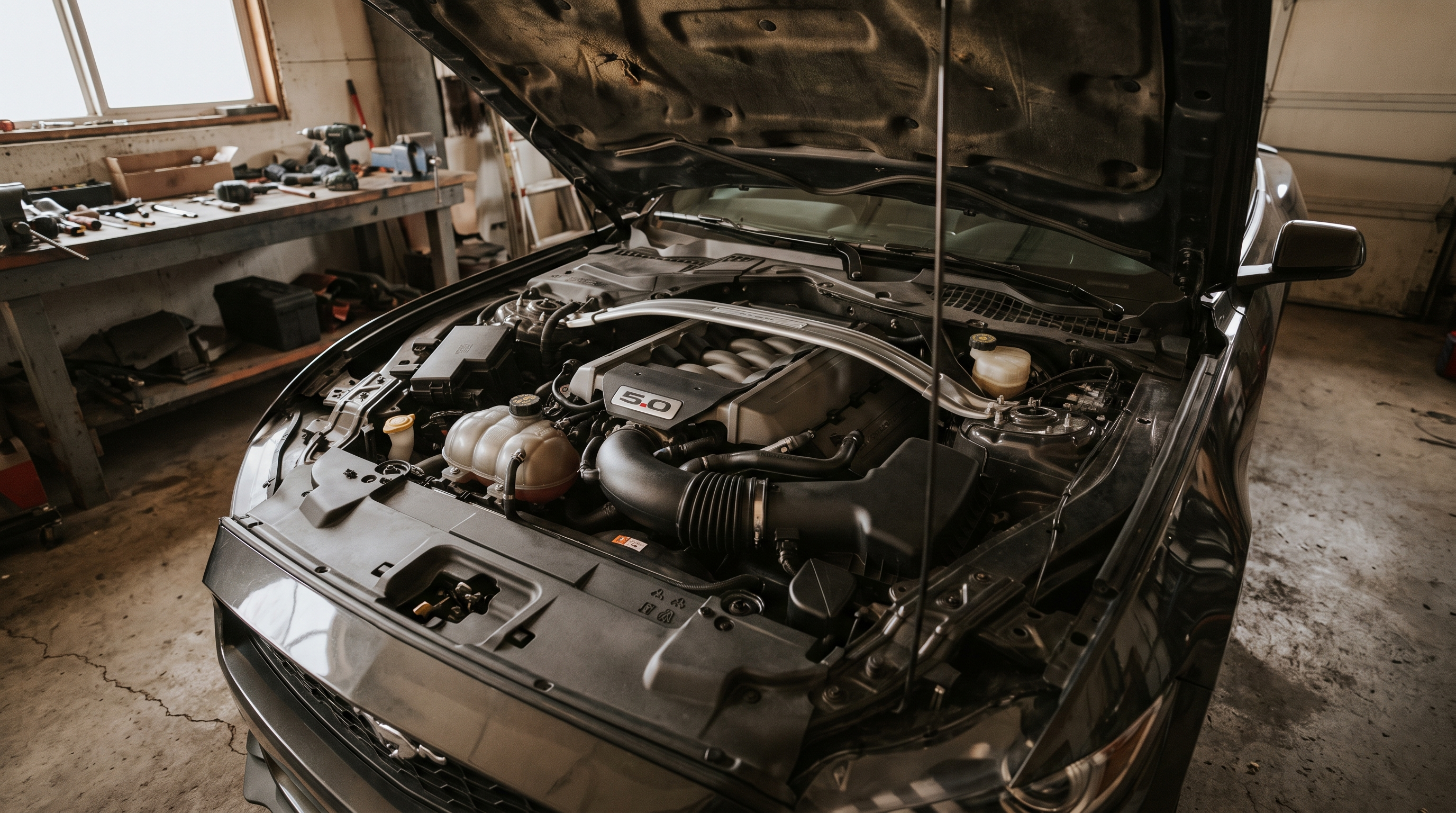
Not everyone wants to force-feed their Coyote with a supercharger. There is a whole crowd that respects a well-built naturally aspirated Mustang: the linear power, the response, the sound, and the reliability that comes from not adding boost. If that is you, here is how to get the most naturally aspirated power out of your Coyote GT, in the right order.
Quick answer: A naturally aspirated Coyote responds to breathing and tuning. Build it in order: intake and a tune, then a full exhaust with long-tube headers, then the supporting pieces like gears to make it feel faster. The gains are real but modest compared to boost, so the naturally aspirated path is about the driving experience and reliability, not chasing the biggest number.
Set expectations first
Naturally aspirated bolt-ons free up power the factory left on the table, but they will not double your output the way a power adder can. What they deliver is a sharper, more responsive, better-sounding car that keeps the linear naturally aspirated character. If your goal is a huge number, a supercharger is the efficient path, as covered in our power adder paths guide. If your goal is a crisp, reliable, great-sounding street car, naturally aspirated is a rewarding way to build.
The naturally aspirated build order
Step 1: Intake and tune
Start with breathing and calibration. An intake improves airflow and response, and a tune ties it together and unlocks the most from every mod. This is the foundation. See our tune guide. Browse intakes and tuners.
Step 2: Full exhaust with headers
On a naturally aspirated Coyote, long-tube headers are where the real exhaust power lives, and a catback completes the flow and sound. Pair headers with a supporting tune. Note that many long-tube and catless setups are off-road use only, so check your local and state emissions laws first. See our headers guide. Browse headers and exhaust.
Step 3: Make it feel faster
Gears do not add horsepower, but a numerically higher rear gear multiplies torque to the wheels and makes the car feel dramatically quicker, especially with a naturally aspirated engine that lives on rpm. Lighter wheels help too, reducing rotating weight. Browse differentials and gears and wheels.
Step 4: The deeper stuff
If you want more, the naturally aspirated ladder continues into camshafts, an intake manifold, and valvetrain support, which reshape the powerband but demand a proper tune and supporting parts. This is serious territory. Browse camshafts and intake manifolds.
Do not forget the rest of the car
A naturally aspirated build rewards a balanced car. Suspension, brakes, and tires let you use the response you built, and E85 with a supporting tune is a cheap way to add naturally aspirated power if you want more, as covered in our E85 guide. Browse suspension and brakes.
Frequently asked questions
How much power can a naturally aspirated Coyote make with bolt-ons?
Bolt-ons free up a meaningful but modest amount compared to boost. The full combination of intake, headers, exhaust, and a tune gives the best naturally aspirated result. Real numbers vary by setup and fuel.
What is the best naturally aspirated mod for power?
Long-tube headers with a supporting tune deliver the most of any single naturally aspirated exhaust component. A tune is what makes every mod work.
Do gears add horsepower?
No, but a numerically higher gear multiplies torque to the wheels and makes the car feel much faster, especially with a rev-happy naturally aspirated engine.
Is naturally aspirated better than a supercharger?
It depends on your goal. Naturally aspirated is about linear power, response, and reliability. A supercharger makes far bigger numbers. Neither is better in the abstract.
Should I run E85 on a naturally aspirated build?
E85 with a proper tune is a cheap way to add naturally aspirated power. It needs a supporting tune and often fuel system parts, as covered in our E85 guide.
Build your naturally aspirated Coyote
Everything filters to your exact car. Browse intakes, headers, exhaust, tuners, and gears. Build in order, tune it right, and follow your local emissions laws.


