

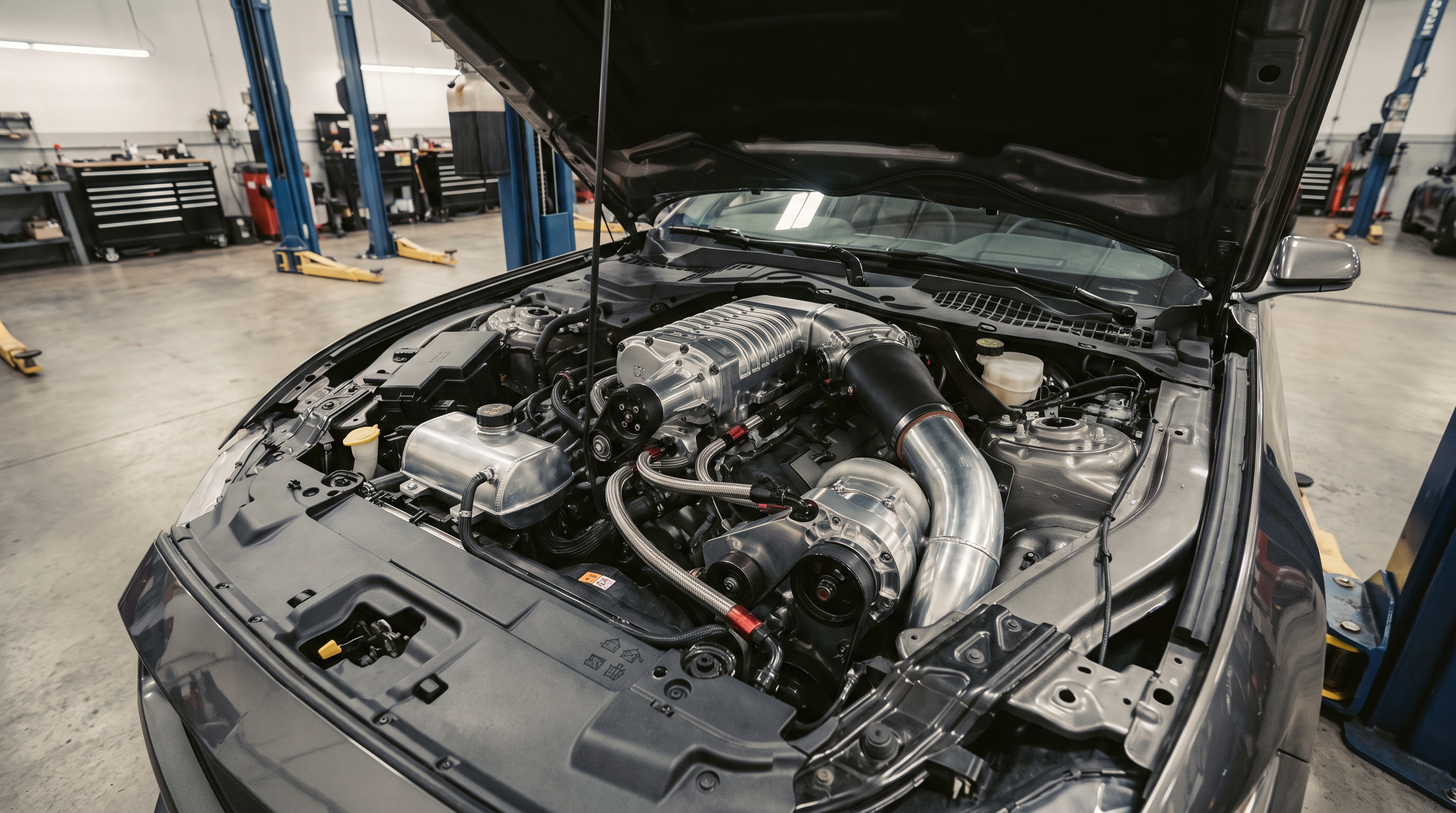
When you decide to supercharge your Coyote, the next question is which kind. Superchargers come in different designs, and they make power in noticeably different ways. Understanding the difference helps you pick the one that matches how you drive. Here is the plain-English guide to supercharger types for the Mustang.
Quick answer: The two main supercharger styles for a Coyote are positive-displacement (roots and twin-screw, the ones that sit on top of the engine) and centrifugal (the belt-driven compressor that mounts to the front, like a turbo without the exhaust side). Positive-displacement gives instant low-end torque, centrifugal builds power as rpm climb and often makes big top-end numbers. Both make great street power, so choose based on the power delivery you want.
Positive-displacement superchargers
These are the blowers that sit on top of the engine, including roots and twin-screw designs. They pressurize the intake immediately, so boost is there the instant you touch the throttle. That gives a hard-hitting, instant-torque feel that is intoxicating on the street, a huge shove right off idle. They also give that classic supercharged look under the hood. The tradeoff is that they can generate more heat, so charge cooling matters.
Who it is for
- You want instant low-end torque and street punch.
- You love the look and feel of a top-mount blower.
- You want strong power everywhere, not just up top.
Centrifugal superchargers
A centrifugal supercharger is a belt-driven compressor mounted to the front of the engine, and it behaves more like a turbo without the exhaust plumbing. Boost builds with engine speed, so it comes on stronger as the rpm climb and often makes very high peak power at the top. The power delivery is more progressive, which some drivers prefer for traction and a more linear feel. It is also often praised for efficiency and big top-end numbers.
Who it is for
- You want big top-end power and a more progressive delivery.
- You value the traction benefits of boost building with rpm.
- You want efficiency and a proven, reliable design.
What both setups require
Whichever style you choose, a supercharger is a system, not just a part. Both need a supporting fuel system, charge cooling, a proper tune, and often drivetrain upgrades to handle the power reliably. Do not cut corners on the supporting mods. Our supercharger guide covers the full system, and the power adder paths guide compares supercharging to turbo and nitrous. Browse superchargers, fuel system, and intercoolers.
Emissions, read this first
Superchargers and their tunes touch emissions equipment, and some kits and calibrations are not legal for street use everywhere. Look for CARB information where required, check your local and state emissions laws before buying, and build responsibly and legally for where you drive.
Frequently asked questions
What is the difference between a roots and a centrifugal supercharger?
A roots or twin-screw (positive-displacement) blower sits on top of the engine and gives instant boost and low-end torque. A centrifugal mounts to the front and builds boost with rpm, making strong top-end power more progressively.
Which supercharger is better for the street?
Both are excellent street options. Positive-displacement gives instant torque and street punch, centrifugal gives a more progressive delivery and big top-end. Choose the power feel you want.
Which makes more power?
Both can make big power. Centrifugal setups are often noted for high peak numbers up top, while positive-displacement shines with immediate torque everywhere. The full setup and tune matter most.
Do superchargers need a tune?
Absolutely. Any supercharger requires a proper tune to manage fuel, timing, and boost safely, along with supporting fuel and cooling. It is not optional.
Are superchargers street legal?
It depends on the kit and your state. They touch emissions rules, so check your local and state laws and look for CARB information where required.
Build your boosted Coyote
Everything filters to your exact car. Browse superchargers, power adders, and fuel system parts. Build the foundation first, add the supporting mods, tune it right, and follow your local emissions laws.


